Showing posts with label NGO Development. Show all posts

Thursday, January 26, 2012

Yale Service Tours - Yale Alumni Travel Programs, Community Development, Volunteer Work

yasc

A generation ago Sargent Shriver '38, a Yale alumnus renowned for his public service, gave voice to a new vision of global citizenship: that a single citizen could be as important as any institution; that it was possible to change the world one life at a time. His vision, of course, was the Peace Corps.”

Today the Yale Alumni Association keeps that vision alive with its Service Tours to help people around the world. Read more about it at the following link.

Yale Service Tours - Yale Alumni Travel Programs, Community Development, Volunteer Work


Tuesday, October 04, 2011

Global Pulse | Harnessing innovation to protect the vulnerable


The United Nations has launched a new project that may be of great value to many NGOs working to improve the conditions of communities around the Globe.

Global Pulse, is an innovation initiative of the UN Secretary-General, that allows for the analysis of patterns within big data and could possibly revolutionize the way NGOs and governments respond to economic shocks, disease outbreaks, and natural disasters around the world. You can find more information about this project at the online Forbes article: Data Philanthropy is Good for Business dated 9/20/11. Also, the United Nations has a Global Pulse web site [Link below].

In a nutshell, this initiative is working to “develop methods for harnessing real-time data to gain a real-time understanding of human well being.”

Global Pulse | Harnessing innovation to protect the vulnerable


Thursday, September 08, 2011

Wherever the Need publishes its 2011 Summer Newsletter

Wherever the Need has been doing wonderful work for years. Focusing on Water Resources, Eco Sanitation and other resource issues, they have been mindful and balanced Development with Ecological responsibility.

They have just released their Summer 2011 Newsletter, and it is work a look.

------------------------------------------

2011 Summer Newsletter

"If there is a holy grail with regard to sanitation, it is
finding a solution to the needs of the billions of people
who live in inner cities. Many live in slums and the cost
of infrastructure would be astronomical as water based
toilets are often regarded as the only option – although
where the water will come from is rarely explained
satisfactorily!" Quote for Wherever the Need Summer 2011 Newsletter.

2011 Summer Newsletter | Wherever the Need


Wednesday, September 07, 2011

From the Field: Community Engagement Inside Kibera (September 1, 2011) | Opinion Blog | Stanford Social Innovation Review

The Bazaar has been following Rye Barcotte and Carolina for Kibera for over 5 years now, and this article: " From the Field: Community Engagement Inside Kibera" recently appeared in the Sanford Social Innovation Review


Kibera is one square mile. Its population is estimated between 170,000 and 1,000,000 people. The average daily income is $1.25. (Photos by Rebecca Shearin)

"It’s easy to look at global poverty alleviation work abstractly. I spend a lot of time reading about and debating the meaning of “social entrepreneurship,” “community engagement,” and other popular jargon of our field, far away from communities in extreme poverty. But it only takes a minute of visiting a small nonprofit in, say, Kibera, a Nairobi slum of 1 million people, to remind you that distance is the wrong reference point.

This spring, I met Rye Barcott on a book tour for his memoir It Happened on the Way to War: A Marine’s Path to Peace, and learned about Carolina for Kibera (CFK). Celebrating its tenth anniversary this year, CFK’s mission is to develop local leaders,
catalyze positive change, and alleviate poverty in Kibera. One of CFK’s core beliefs is that community problems require local solutions run by local leaders."

The rest of the article may be found at the following link:
From the Field: Community Engagement Inside Kibera (September 1, 2011) | Opinion Blog | Stanford Social Innovation Review

Monday, August 22, 2011

Africa: Zambia to Host Land Policy Meeting

farm


By George Okore


LUSAKA----A stakeholder dialogue on land policy issues in Africa will held in Lusaka, Zambia from October 4-5, 2011 in Lusaka, Zambia.

The forum to address underlying transnational commercial land deals in Africa comes at time when many Western Super powers are promoting and perpetuating improper land acquisition and use, hence agricultural challenges and food crisis facing the continent. Former African colonial masters are land problems in many African countries including Kenya, Zimbabwe, Malawi, Somalia, Ethiopia among others.

The High Level Forum on Land-Based Foreign Direct Investments in Africa comes at a time when recent discussions have focused on increasing demand of farmlands across the continent by both foreign and local investors. The meeting will explore and reach agreement and consensus on appropriate and concrete actions on how to address the issue of land based investments in the continent in an environmentally and socially responsible manner.

To read more, go to the following link:

Africa: Zambia to Host Land Policy Meeting


Friday, July 15, 2011

Medicines Patent Pool and Gilead Ink Agreement Making HIV and Hepatitis B Treatment More Available in Developing Countries.

The Medicines Patent Pool Announces
First Licensing Agreement with a Pharmaceutical Company

London, 12 July 2011: Today the Medicines Patent Pool announces its first licenses with a pharmaceutical company, Gilead Sciences, to increase access to HIV and Hepatitis B treatment in developing countries.

pills_full_width_full_width

Photo from Medicines Patent Pool web site

* * *

The Medicines Patent Pool and UNITAID joint press release is available here [pdf], and also posted below.

Questions and answers on the Patent Pool licenses are available here [pdf].

Per the Medicines Patent Pool transparency policy [pdf], the full texts of the licenses are posted below.

The main licensing agreement between the Medicines Patent Pool and Gilead is available here [pdf].

The amended and restated form is available here [pdf].

The form sublicensee agreement is available here [pdf].

Medicines Patent Pool and Gilead Licence Agreement / Current Licences / LICENSING / Home - Medicines Patent Pool


Monday, May 23, 2011

FHI helps to spread the word of about HPTN Study 052- Initiation of Antiretroviral Treatment Protects Uninfected Sexual Partners from HIV Infection.


A very encouraging press release came out on May 11, 2011 from the HIV Prevention Trials Network (HPTN) and was followed up by this posting by the Family Health International (FHI).
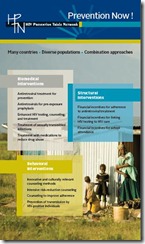


HPTN Booklet


Cover of HPTN publication


-------------------------------------------------------------------


Initiation of Antiretroviral Treatment Protects Uninfected Sexual Partners from HIV Infection (HPTN Study 052)


FHI Statement on HPTN 052


May 12, 2011


Men and women infected with HIV reduced the risk of transmitting the virus to their sexual partners by 96 percent through early initiation of oral antiretroviral therapy (ART), according to findings from a large-scale multinational clinical study conducted by the HIV Prevention Trials Network (HPTN).


The clinical trial, known as HPTN 052, was designed to evaluate whether early antiretroviral use by an HIV-infected individual would reduce transmission of HIV to an HIV-uninfected partner and potentially benefit the HIV-infected individual as well. The trial is the first randomized clinical trial to show that treating an HIV-infected individual with ART can reduce the risk of sexual transmission of HIV to an uninfected partner.


HPTN is a global partnership dedicated to reducing the transmission of HIV through cutting-edge biomedical, behavioral, and structural interventions, largely funded by National Institute for Allergy and Infectious Diseases with additional funding from National Institute on Drug Abuse and National Institute for Mental Health, at the US National Institutes of Health. FHI serves as the coordinating and operations center for HPTN. As the operations center, FHI is responsible for the scientific management of HPTN and facilitates and participates in HPTN leadership, scientific working groups, protocol teams, and the community engagement program.


"FHI is proud of our role as the Operations Center for HPTN in facilitating the HPTN 052 study," said Dr. Ward Cates, President, Research at FHI and member of the leadership of HPTN. "Treating infected individuals prevents transmission to their uninfected partner and benefits the individual. Armed with these findings, FHI can continue to contribute to the informed care and treatment and prevention of HIV through our global programs and intramural research."


HPTN 052 began in April 2005 and enrolled 1,763 HIV-serodiscordant couples at 13 sites across Africa, Asia and the Americas, the vast majority of which (97 percent) were heterosexual. An HIV-serodiscordant couple has one member who is HIV-infected and the other who is HIV-uninfected. In the study, the HIV-infected partner was required to have a CD4+ cell count (T cells) between 350-550 cells/mm3 at enrollment, and therefore did not require HIV treatment for his or her own health.


The investigators randomly assigned the couples to one of two study groups. In one group, the HIV infected partner immediately began taking a combination of three antiretroviral drugs upon study enrollment. In the other group, the HIV-infected partners began ART when their CD4 counts fell below 250 cells per cubic millimeter (cells/mm³) or an AIDS-related event occurred.


Throughout the study, both groups received HIV-related care that included counseling on safe sex practices, free condoms, treatment for sexually transmitted infections, regular HIV testing, and frequent evaluation and treatment for any complications related to HIV infection. Each group received the same amount of care and counseling. In addition, individuals who become HIV-infected during the course of the study are referred to local services for appropriate medical care and treatment.


The trial was slated to end in 2015; however, the independent Data and Safety Monitoring Board (DSMB) recommended that the results be released as soon as possible. The DSMB concluded that it was clear that early initiation of ART by HIV-infected individuals with relatively healthy immune systems substantially protects partners from infection, with a 96 percent reduction in HIV transmission.


Study participants are being informed of the results. The study investigators will continue following the study participants for at least one year.


"This is excellent news," said Dr. Myron Cohen, HPTN 052 Principal Investigator and Associate Vice Chancellor for Global Health and Director of the Institute of Global Health and Infectious Diseases at the University of North Carolina at Chapel Hill. "The study was designed to evaluate the benefit to the sexual partner as well as the benefit to the HIV-infected person. This is the first large randomized clinical trial to definitively indicate that an HIV-infected individual can reduce sexual transmission of HIV to an uninfected partner by beginning antiretroviral therapy sooner. HPTN recognizes the significant contribution that this study's participants have made to furthering the progress in HIV treatment and prevention. We are very grateful for their participation."


About HIV Prevention Trials Network


The HIV Prevention Trials Network (HPTN) is a partnership between scientists and communities around the world to develop, evaluate, and implement cutting-edge biomedical, behavioral, and structural interventions to reduce the transmission of HIV. HPTN uses randomized controlled clinical trials, designed and conducted according to the highest scientific and ethical standards, to identify the best combinations of interventions for the populations at highest risk of HIV infection worldwide. HPTN is largely funded by NIAID with additional funding from NIDA and NIMH, at the NIH.


About FHI


FHI is a global health and development organization whose science-based programs bring lasting change to the world's most vulnerable people. Since 1971, FHI has worked with 1,400 partners in 125 countries, forging strong relationships with governments, diverse organizations, the private sector and communities. By applying science to healthcare programs and clinical research, FHI is helping countries make measurable progress against disease, poverty, and inequity—improving lives for millions.


###


For more information, view the HPTN press release (May 11, 2011) or visit www.hptn.org
Media inquiries:


Matt Matassa


703.647.1909;


mmatassa@fhi.org


FHI - Initiation of Antiretroviral Treatment Protects Uninfected Sexual Partners from HIV Infection (HPTN Study 052)


Monday, January 10, 2011

Congolese Students and Survivors Use ICTs to Prevent the Spread of Violence


This is an article that first appeared a few months ago, but because so few items appear on English language sites on the internet, in thought that it would nice to post this.

By Azur Développement for APC

BRAZZAVILLE, Republic of Congo, 27 October 2010


Five different organisations in the Republic of Congo (Brazzaville) are receiving small grants as part of the APC Women’s programme’s – Take Back the Tech! to fight violence against women project. Female students, women and girls who have survived violence and abuse will learn how to use different technologies to signal cases of abuse, build awareness around their experiences and help support others victims. Read more about these innovative projects, which will be taking place until March 2011.

TAKE BACK THE TECH! FUND WINNERS IN THE REPUBLIC OF CONGO

Association Dynamique Plurielle in Brazzaville, Republic of Congo, will work with 250 female 1st to 3rd year high school students from Savorgnon de Brazzaville High School to fight against sexual harassment in schools by involving teachers and school management. It will organise awareness meetings on the Portella and Potignon Acts, which prohibits relationships between teachers and students and protects minors, during which they will screen video testimonies from survivors of abuse. During the project, students will also send alerts about sexual harassment cases via SMS by the students; and a “listening cell” of the organisation at the high school will actively respond. Educational information about the laws will be sent to 250 students; and trivia questions via SMS and MMS will be sent out participants. Winners will be awarded free internet browsing tickets for the best answer. Students will also be trained on how to use the internet to teach and train others. They will also be sensitized to online privacy and security issues when surfing the internet and using mobile phones.

Association Femmes Solidaires in Brazzaville will train fifteen young mothers infected with HIV/AIDS and survivors of violence in counselling so they can provide psychological support to their peers. Awareness-raising sessions will be held on human rights, targeting 50 women and young mothers infected with HIV/AIDS. Ten of them will be trained in basic computers skills, internet browsing and searching, and writing articles and blogs to document the experiences of violence by HIV-positive women and girls. Radio shows that broadcast the testimonies of these survivors of violence will be produced with the assistance of female journalists and members of the organisation. These radio programs will be reproduced on CDs and distributed to other organisations for their advocacy and educational activities, and uploaded to the internet.

Jeunes Infrastructure et Développement (CJID) will work to reduce violence against women and girls in Kinkala, an area that was affected by armed conflict until 2003, through awareness and education on ICTs. Twenty female soldiers and policewomen will be sensitised about violence against women. Around100 survivors of violence will be reached by this project; from which 35 will be trained in basic computer skills and internet use. They will create a listening space for survivors at their office, and provide mobile internet access to the people of Kinkala, especially young students. The project will also produce video testimonials with a team of survivors of violence, which will be screened at awareness meetings and shared with other organisations. There will also be an SMS contest for the best testimonies, and a moderated blog will be put in place to give voices to the project beneficiaries on the web.

Comptoir Juridique Junior will work with 200 students in the Mpaka Secondary School and the OCH Technical High School in Pointe-Noire to fight against and prevent sexual harassment in schools. Their actions will involve teachers and school management. Students will send alerts on cases of sexual harassment via SMS, and different measures will be taken after a consultation. Competitions for testimonies by survivors of violence via SMS and MMS will be held with 200 students, and the best testimonies will be awarded with training on the use of the internet for learning purposes. The project also educates students on privacy and security online when surfing the internet and using mobile phones. A network of students from both institutions will be created before the end of the project.

Handicapés Sans Frontières in Pointe-Noire will gather some sixty female journalists, women and girls with disabilities to educate, denounce, and find solutions to end violence against them, as well as help them break their silence. The organisation will hold awareness sessions on women’s rights and how to fight violence against women in the media and women’s circles for those with disabilities. They will be trained in basic computer skills and the internet in order to communicate about violence through blogs, photos and mobile phones. They will learn how to record sounds with mobile phones, how to take and upload photos and how to upload video and audio to the internet. Women and girls with disabilities and survivors of violence will also use the internet to advocate for a space where they can express themselves. Female journalists involved in the project will present radio and television programs that demonstrate the magnitude and call for action on violence against women and girls with disabilities.

As part of its work towards achieving the Millennium Development Goal #3 (MDG3), the Association for Progressive Communicaitons Women’s Networking Support Programme (APC WNSP) is providing a small grants fund for projects working with women, technology and raising awareness about violence against women in over 30 communities. Funds from the MDG3 grant are going directly towards supporting over 60 local, primarily community based organisations to implement projects that use ICTs to end violence against women and building their capacity to do so.

The Take Back the Tech! fund is a part of the APC women’s programme Take Back the Tech! to end violence against women project, which falls under the APC’s work towards achieving the third Millennium Development Goal on equality for women. A total of $20 000 dollars have been disbursed to twelve country partners for redistribution to local and grassroots organisations that are working with women and ICTs.
Photo by l’Association des Femmes Solidaires: Survivors of violence undergo training and counseling in Brazzaville.


Sunday, December 19, 2010

ANOTHER STORY OF VISION

Photo from SIC website


Dr. Matthew Craven had a vision. He earned his B.A. in Economics from Stanford University in 2001. That year he also got his first exposure to global health during a month he spent teaching HIV prevention seminars in Tanzania. While in Tanzania he witnessed the ineffectiveness of the existing healthcare delivery systems, especially to rural communities. He returned to Tanzania the following year and co-found Support for International Change (SIC), a non-profit organization working with the government to limit the impact of HIV in underserved communities through expanded access to education, testing, and treatment.

Dr. Craven also started SIC’s global health leadership training programs, which aims to develop a new generation of leaders for the field. He served as Executive Director of SIC for the next five years, first based in Tanzania and then in the U.S.

In 2008 Dr. Craven earned his M.D. from the Stanford University School of Medicine.


SUPPORT FOR INTERNATIONAL CHANGE

Their Mission
To limit the impact of HIV/AIDS in underserved communities and to train future leaders in global health and development.


Their Vision
SIC believes that the HIV/AIDS crisis creates both an imperative to act and an opportunity to learn. We envision a world where HIV/AIDS no longer limits length or quality of life or reduces the social or economic development of communities, and where young people learn the skills to address the health crises of future generations.


Their Approach
SIC was founded in August 2002 with the dual goals of limiting the impact of HIV/AIDS in Tanzania and training future leaders for global health and development. In the rural communities where we work, poor infrastructure and widespread poverty limit access to HIV testing and prevention services, and leave people living with HIV socially and physically isolated from care. Public clinics provide VCT and antiretroviral medications in urban centers, but lack of information, stigma and the costs of transportation all represent barriers to access and leave these services beyond the reach of Tanzania’s rural majority. As a result, HIV transmission continues, few people are tested in the villages and many of those living with AIDS die without accessing treatment.

In response to this crisis, SIC currently works in rural villages in northern Tanzania, offering a comprehensive set of community based services to combat HIV/AIDS. SIC supports a Community Health Worker (CHW) Program, a Peer Educators (PE) Program in secondary schools, community-based health awareness campaigns, and mobile Voluntary Counseling and Testing (VCT). With a few pilot programs, in conjunction with the district hospitals, we support mobile ARV clinics.

In addition to these community level interventions, SIC offers structured service-learning programs for international and Tanzanian volunteers. During our eight and twelve week programs, volunteers add capacity to our work, primarily by serving as teachers in our awareness campaigns. Hundreds of student volunteers have passed through our programs since 2003. Many have gone on to graduate or professional training in related fields, to found other organizations, or to other leadership positions in global health and development.


Monday, May 17, 2010

KOFI ANNAN GUIDES AGRA FOR A GREENER TOMORROW


AGRA’s integrated programs in seeds, soils, market access, policy and partnerships and innovative finance work to trigger comprehensive changes across the agricultural system. Our programs also strengthen agricultural education and extension, address the issue of efficient water management, and strive to involve and train youth.

AGRA’s programs and partnerships work for comprehensive changes across the agricultural system to benefit smallholder farmers, the majority women. Integrated programs in seeds, soils, market access, policy and partnerships, and innovative finance are transforming subsistence farming into sustainable, viable commercial activity.
AGRA’s programs also work to strengthen agricultural education and extension, train youth, develop rural infrastructure, improve efficient water management and enable smallholder farmers to adapt to and mitigate climate change. All of our programs pay special attention to the women farmers who produce the majority of Africa’s food. AGRA programs seek to empower women with full and equal access to finance, land security, extension services and new agricultural tools and technologies.
From Africa’s high-potential breadbasket areas, to broader and more challenging environments, AGRA’s integrated programs are making a difference. One example is found in the Southern Highlands of Tanzania, where 700,000 smallholder farmers produced a record maize harvest in 2009, helping to feed drought-stricken regions of the country.

Mr. Kofi A. Annan, former Secretary-General of the United Nations, Chairs AGRA’s Board. A team of distinguished African scientists, economists and business leaders guide its day-to-day work. With a budget of close to US$400 million, as of June 2009 AGRA had approved 116 grants valued at US$83 million in 14 countries. Grantees operate across the agricultural value chain, laying the basis for the kind of comprehensive, integrated change needed by Africa’s smallholder farmers.
----------

Learn more about AGRA at the link below:
AGRA


Monday, April 19, 2010

Youth for Technology Foundation


Youth for Technology Foundation (YTF) is an international non-profit organization that seeks to bridge the digital canyon among disadvantaged communities in developing countries, starting with the continent of Africa. The vision of Youth for Technology Foundation is to foster wealth creation, reduce unemployment and create self-sustaining communities by providing marginalized people in rural communities with the technology tools, training and resources to enable them to realize their greatest potential.


Technology - even in small amounts- is helping developing nations and communities overcome tradition totake leaps forward. YTF recognizes that access to information holds the key to the empowerment of marginalized people, particularly youth and women.
-------------------------
The above is the logo and introduction to Youth for Technology Foundation posted at their website. You can learn more by going there.

Wednesday, January 27, 2010

Italian official condemns Haiti earthquake relief as 'vanity parade'


The Bucharest Herald ran this story illustrating that many question the primary motives of many organizations and governments who have rushed (with great flourish) in to help Haiti in the aftermath of its most recent horrific disaster.


The picture posted from the Bucharest Herald story shows what appear to be combat ready soldiers in front of an American flag and poses the question: :"Why do these American soldiers need to be combat as they try to assist Haiti?"


Guido Bertolaso, the head of Italy's civil protection service, who is quoted in this story stated that the large US military mission in the country was not entirely helpful.


The story can be found at the link below.

Monday, October 26, 2009

FUGEES FAMILY'S COACH MUFLEH WINS COMMON GROUND AWARD

Photo from Fugees Family website

Fugees Family came to my attention because it's founder, Luma Mufleh is receiving an award from Search For Common Ground, another non-profit engaged in making the world a better place. Coach Mufleh and her story - and the story of the Fugees Family can be found on the websites listed below. But here briefly is a short statement from the Fugees Family website that explains what it is doing.

FUGEES FAMILY, INC. is a 501(c)(3) non-profit organization devoted to working with child survivors of war. We build upon the power of soccer to galvanize these kids by giving them the support and structure they need to realize their vast potential. Five years ago, Coach Luma Mufleh started a Fugees team to provide refugee boys with free access to organized soccer. Since then, our programming has grown to include year-round soccer for 86 boys aged 10-18, after-school tutoring, a private academy, and an academic enrichment camp.

The Fugees Family provides a space for the kids to heal and meet others like them, from different countries, who have been through similar experiences. The players might begin by regarding one another with distrust or even hostility. By conducting drills with various players grouped together and enforcing an English-only policy at all times, the kids learn to cooperate. Africans and Asians, Northern and Southern Sudanese, Muslims and Christians, Sunni and Shia Muslims - they all play on the same team, finding their commonalities instead of focusing on their differences. Their bonds make them more secure in their own identity and more capable of acclimating to the mainstream.

The Fugees Family works to afford our kids equal access to the educational opportunities others in their age group have, helping them to acquire the social and academic skills necessary to succeed. Our goal is for the players to work hard and graduate from high school with a plan for college, technical school, or job training. We are committed to an approach that takes the whole individual into account: we are consistently involved in all areas of the kids' lives, we set high expectations on and off the field, we foster a familial atmosphere, and we have fun.


FUGEES FAMILY


SEARCH FOR COMMON GROUND'S STORY ABOUT COACH MUFLEH


SEARCH FOR COMMON GROUND

Thursday, October 22, 2009

PLAY SOCCER

Image from Play Soccer web site

The PLAY SOCCER grassroots community says that its program aims to make the world a better place for children and youth who master and enjoy playing soccer/football while learning health, physical and social development life skills.


Read More about it here.


Thursday, October 15, 2009

BID NETWORK: LOOKING FOR DEALS


Photo from BiD Network web site
BiD Network has proudly announced that the Access to Clean Energy Challenge was launched on October 1st of 2009. The Access to Clean Energy Challenge is a business plan competition for entrepreneurs that deliver access to clean energy in developing countries, and is being organized by BiD Network with the support of E&Co, GVEP , Barclays, Jump up and FMO.

On its web site Bid Network gives ground rules for the competition:

“Clean energy comprises: wind, solar, biogas, hydro, liquefied petroleum gas, biomass and energy efficiency. Non-renewable energies are not excluded but the approaches to energy production, usage or financing should focus on established, affordable, reliable technologies that move communities up the energy ladder towards cleaner, more modern forms of energy.

“As with all the Challenges, participants submitting plans will receive feedback and support in the writing of their business plans. Winners will receive an actual investment and their business plans will be presented to more than 100 potential investors.”

In addition to the main competition, there is a “sub” competition which is only open for East African countries called: Access to Clean Energy Challenge East Africa. This Challenge is focused on the following countries: Kenya, Mozambique, Rwanda, Tanzania & Uganda.


The BiD Network states that it is an “online marketplace for business in developing countries. It is an online community of thousands of entrepreneurs, experts and investors from all over the world with a common aim: to stimulate business opportunities in developing countries.”


The BiD Network:

1. Makes SME business plans visible

2. Links entrepreneurs to finance and expertise


Ambitions of the BiD Network Foundation:

Establish several decentralised national BiD Challenges in developing countries

Bring more entrepreneurs into the BiD Network (start-up and established businesses)

Engage hundreds of professionals from companies and NGOs as business coaches

Move from a ‘prizes-only format’ to one providing loans and investments

Develop an online investor-to-entrepreneur lending facility


What moves us

The Private sector is the backbone of any economy. It is of key importance for economic development and poverty reduction in developing countries. But two significant problems arise in this context:

The ‘deal- flow’ problem: over large geographical distances it is hard to find, identify and verify good business propositions in developing countries. Quality business plans are ‘hidden’ and so are entrepreneurs to implement them.

The ‘missing middle’ problem. There is a financing gap between $5.000 and $500.000 (where microfinance stops and commercial finance starts) for small and medium enterprises (SMEs) in developing countries.

Our mission is to tackle these two problems. We have created the BiD Network and the BiD Challenge to support SMEs in developing countries.


Our objective

To contribute to sustainable economic development by stimulating entrepreneurship in developing countries


We try to achieve this by

Stimulating small and medium sized entrepreneurship to create jobs and raise income in developing countries.

Engaging professionals, investors and organisations offering them the opportunity to directly contribute to poverty reduction through SME development in developing countries.

Inspiring people that business and poverty reduction can go hand-in hand.


What is the BiD Challenge?

The Business in Development (BiD) Challenge is the first international business plan competition for entrepreneurship and development. The BiD Challenge offers entrepreneurs worldwide the opportunity to develop and execute business plans that improve living standards in developing countries at a profit.


What can the BiD Challenge offer you?

Entrepreneurs: access to a worldwide platform to make your business plan visible; receive professional feedback and assistance from business coaches; get exposure to a network of investors, experts and business partners and a chance to win prize money.

Companies & NGOs: the opportunity to share the competence and expertise network of your organisation with thousands of entrepreneurs in developing countries. Engage your employees, invest in SMEs and get a network, market insight and possible return on investment.

Professionals: the opportunity to make a difference by sharing your business expertise with entrepreneurs as a coach, screener or jury member. Enjoy a wonderful experience, broaden your market insights and possibly get a stake in a change-making business.


Wednesday, September 09, 2009

THE CIVIL SOCIETY DECLARATION AS AN OUTCOME OF THE CIVIL SOCIETY FORUM

From November 25 - 27 there was a CIVIL SOCIETY FORUM held in DOHA, QATAR. The Doha NGO Group on Financing for Development (DNG) issued a "Civil Society Declaration" in response to that forum and concluded:


"In the face of the multiple crises, we urge governments to take the side of women and men workers, farmers, youth and children to promote environmental sustainability by taking an alternative economic path. We, 250 national and international civil society networks, representing millions of people from around the world, therefore call for change in Doha that puts effective development, poverty eradication, human rights, gender equality, decent work, and environmental sustainability at the fore."


The DNG expressed why they felt the need to issue its Declaration when they stated:


"Today the world is consumed by an urgent series of crises: energy, food, climate, and finance that not only threaten the realization of the MDGs and the lives and livelihoods of hundreds of millions of people, in the North and the South, but also the stability of the world’s economies. The Northern governments and financial system are responsible for the current crises, but the costs and the impacts are paid for by the entire world, and by the poorest countries in particular. According to the Food and Agriculture Organization $30 billion are required every year to eradicate poverty. Trade negotiations have reached a stalemate. Persistent gender inequalities reflect and are related to all these structural imbalances in the global economic system; thus it is urgent to include a gender perspective into all policies, at all levels and sectors, as well most Northern countries are falling far short of meeting their aid commitments. Overcoming these crises requires decisive action and leadership from the global community. To date however, such leadership has been sorely missing."
The entire Declaration can be read online at the CIVIL SOCIETY DECLARATION


Monday, August 31, 2009

WATER.ORG: THEIR HEADS IN THE CLOUDS AND THEIR FEET ON THE GROUND


[This information has been taken directly from the web site of Water.org; and more information may be found at its web site by following the link at the end of this posting.]


Photo from Water.org

About Water.org

Co-founded by Matt Damon and Gary White, Water.org is a nonprofit organization that has transformed hundreds of communities in Africa, South Asia, and Central America by providing access to safe water and sanitation. Water.org traces its roots back to the founding of WaterPartners in 1990. In July 2009, WaterPartners merged with H2O Africa, resulting in the launch of Water.org. Water.org works with local partners to deliver innovative solutions for long-term success. Its microfinance-based WaterCredit Initiative is pioneering sustainable giving in the sector


Projects

Since its inception in1990, Water.org had helped hundreds of communities in Africa, Asia, and Central America gain access to safe water and sanitation. All of the projects we support are self-sustaining, with organizational and financial structures in place to allow communities to independently operate and maintain them. Projects have an active water committee governing the operation of the water system, and users paying a water bill to cover the costs of operating and maintaining the water system.

Below are links to countries where we have active programs. If you have any particular questions about our work, please contact us using the Information Request Form.


Africa

Ethiopia. Our program in Tigray, Ethiopia is serving 32,000 people in 76 communities and six schools. Tigray is a region in northern Ethiopia that borders on Sudan. Tigray is often one of the regions that is hardest hit by drought and crop failure.

Ghana. Program activities in Ghana take place in the Volta and Upper East regions, located in the southeast and northern parts of the country, respectively. Activities include community-based water, sanitation, and hygiene education programs.

Kenya. Water.org is working in the Kisumu region of Kenya. Located on the equator, Kisumu’s climate is hot all year. Much of Nyanza Province, where Water.org is working, is semi-arid and is subject to severe drought. Most people obtain their drinking water from Lake Victoria, seasonal rivers and streams, and hand-dug wells. All of these sources are contaminated. Women and children walk up to six kilometers each day to haul water, a task that can take three hours. Water is not only contaminated at its source but also from the way it is transported and stored.


Asia

Bangladesh. In Bangladesh, Water.org offers both grant and WaterCredit programs, and is addressing safe water needs in both rural and urban areas. Our urban program focuses on the slums of the capital city, Dhaka. Our rural program is located in Rajshahi and Manikganj Districts.

India. Water.org’s program in India provides safe drinking water and adequate sanitation facilities to the families living in five states - Andhrah Pradesh, Karnataka, Madhya Pradesh, Orissa, and Tamil Nadu. Water.org offers both grant and WaterCredit programs in India.

Philippines. Water.org’s program in the Philippines began in 2003 with a project in Barangay Villahermosa.


Central America

El Salvador. Water.org has completed two rural water and sanitation projects serving over 1,200 people in the communities of Caulote and Las Americas. These communities are located in the department of Cuscatlán, located approximately 20 miles northeast of San Salvador. The new water systems in El Salvador are spring-fed pumped systems.

Guatemala. Our projects in Guatemala are located in the department of Quiché. Quiché is in the Western highlands of the country. Because of the high prevalence of mountain streams in the Guatemalan highlands, all of our water solutions in Guatemala are spring-fed gravity flow systems.

Honduras. Water.org has helped more than 40 Honduran communities build their own safe water systems. Our program in Honduras focuses on the Departments of Lempira and Intibuca, in western Honduras. The once heavily forested Departments now suffer from deforestation. This has led to extreme depletion of the local water tables, forcing women and children to walk long distances to collect water for their families.


WATER.org

Thursday, August 06, 2009

LONDON'S AFRICA CENTRE GETS A MAKEOVER

[Below is a message from the Chair of the Council of Management of the Africa Centre in London's Convent Gardens. A new building is in the works and the Centre has a new website. This message is taken verbatim from their new website.]


--------------------------------------------------------

Dear Friends,

Welcome to our new Africa Centre website!

The Africa Centre is being renewed to serve its stakeholders better. Since its inaugural launch in 1964, the Centre has played an important role in projecting a positive face of Africa in London, providing a focal point for all forms of cultural and social activities related to Africa through meetings, talks, visual arts exhibitions, cinema, literature, and the performing arts.

As you may be aware, financial difficulties led to the deterioration of the Covent Garden building, ultimately hindering the full and effective use of the facilities and affecting programming. The latter has now been reduced to a minimum and we are currently forging ahead with plans to redevelop the premises and sustain its operations into the future.

The purpose of the present redevelopment is to guarantee a future Africa Centre where the building’s main facilities can effectively serve the Centre’s remit as a topflight contemporary African cultural and creative centre in Europe, whilst at the same time providing income generation that will ensure long-term sustainability. Business of Culture were brought on board to manage the Centre in the interim and to direct and advise on the Development of the Centre and its future organisation. Considerable progress has been made in stabilising the Centre’s operations and finances and in creating a credible foundation to go forward.

Since the redevelopment process started in 2006, we have come a long way. A lot is happening and various project preparation strands are coming to completion. These include the Feasibility Study carried out by a professional team led by Ash Sakula Architects and project managers, Malcolm Reading Consultants; the commercial and business case for the future centre, incorporating the findings of a thoroughly researched cultural demand assessment, carried out by Good Communications and Business of Culture; the fundraising strategy being developed by The Philanthropy Company and the development of a new programming vision for the future Africa Centre. During this transitional period the centre will continue to be involved in small-scale but exciting cultural events that will pave the way forward.

As Chair of the Africa Centre’s Council of Management since 2004, and on behalf of the Trustees, I would like to reiterate our determination that the Centre’s role be continued and enhanced in the future, free from the uncertainties of the past twenty years. We are committed to realising the potential of King Street site, which has been one of the main strengths of the Centre in its forty-year history and, and offers an unrivalled 'shop window' for Africa in central London.

This new website forms an essential part of our series of initiatives intended to incubate the new Africa Centre in people’s minds, and to reflect the dynamism and excitement of the redevelopment process on an ongoing basis. I encourage you to visit the site regularly for updates on progress made, as well as for details of upcoming programming activities and initiatives.

Best Wishes

Oliver Tunde Andrews

Chair

The Africa Centre

Monday, July 27, 2009

THE AFRICAN GREAT LAKES INITIATIVE

The African Great Lakes Initiative (AGLI) of the Friends Peace Teams has been around for quite a while and done a lot of good. But for all their work and for all the good that they have done, they are still unknown to many people; even people who stay abreast of development work in Africa.
-----------------------------------

[The information below has been taken directly from the AGLI website:
http://www.aglionline.org/index.htm

-----------------------------------

Mission of the African Great Lakes Initiative

The African Great Lakes Initiative (AGLI) of the Friends Peace Teams strengthens, supports, and promotes peace activities at the grassroots level in the Great Lakes region of Africa (Burundi, Congo, Kenya, Rwanda, Tanzania, and Uganda). To this end, AGLI responds to requests from local religious and non-governmental organizations that focus on conflict management, peace building, trauma healing, and reconciliation. AGLI sponsors Peace Teams composed of members from local partners and the international community. We are a 501(c)3 not-for-profit organization.

History of the African Great Lakes Initiative

The African Great Lakes Initiative (AGLI) is a program created by the Friends Peace Teams, an organization consisting of sixteen Quaker Yearly Meetings in the United States who have united to support the traditional emphasis of Quakers in promoting a more peaceful world. In April, 1998, the Friends Peace Teams realized that Quakers in the Great Lakes region of Africa, numbering almost half of the Quakers in the world, were in countries with a great deal of violence, social unrest, genocide, and civil war. Consequently in January 1999, an international delegation of seven team members visited Kenya, Uganda, Rwanda, and Burundi. From this visit and subsequent discussions, the Friends Peace Teams decided to create the African Great Lakes Initiative to support peacemaking activities at the grassroots level. We are a 501(c)3 not-for-profit organization.


AGLI Programs

AVP:
In Rwanda, AVP is conducting six workshops in six resettlement communities for Hutu and Tutsi Rwandans who were recently expelled from Tanzania. They are also doing a series of workshops in remote villages of Eastern Province where the wounds from the genocide are still festering. In Kenya, due to the violence after the December 27, 2007 elections, AVP in western Kenya plans are to conduct 200 basic, advanced, and training for facilitator workshops in various communities. Many of these workshops will involve the young people who were involved in much of the local violence after the election. Sites may include Kisii, Kisumu, and Bondo in Nyanza Province; Shinyalu, Kakamega, the Mt Elgon area, Lugari District, Malava District and Vihiga District in Western Province; and Turbo, Eldoret and Kitale in Rift Valley Province. Each site will have ten or more workshops so that each area can be adequately impacted.

HROC:
In Burundi, HROC is concentrating its work in three up-country sites. They are also developing a special workshop for HIV+ women and a second level, Healing of Memories, workshop.In Rwanda, HROC plans on developing a workshop geared for teenagers and a second for youth in their twenties. These will be done with the children of the Women in Dialogue program of the Friends Peace House. They are also beginning workshops with the Batwa, the third, minority ethnic group in Rwanda. After AGLI began the HROC program in North Kivu of the Democratic Republic of the Congo last year, HROC-North Kivu will use its trained Healing Companions to do basic HROC workshops in internally displaced camps.

Workcamps:
AGLI is planning five workcamps for summer 2009 - FWA clinic in Kamenge, Burundi; Friends Peace Centre in Lubao, Kenya; building homes in Lugari District, Kenya; Gisenyi Peace Center in Gisenyi, Rwanda on the border with Congo; and, the Bududa Vocational Institute and Children of Hope orphanage in Bududa, Uganda.

Friends Women’s Association:
One of the AGLI workcamps will complete the last three rooms needed for the clinic to be recognized by the Government as an approved full clinic. FWA is working with HROC to develop the HIV+ workshop. They continue to work with local HIV+ women (and some men) and do regular medical work for the surrounding population.

----------------------------------

If you get the chance, drop by their web site and take a look at the many exciting things that they are doing in the Great Lakes Region.


THE AFRICAN GREAT LAKES INITIATIVE

Monday, July 20, 2009

YOUTH FOR EFFECTIVE LEADERSHIP FORUM

This information is taken directly from the Youth for Effective Leadership Forum web page of the Eden Readers Commission of Nigeria (ERCON) web site.
-------------------------------------------

YELF is an acronym of Youth for Effective Leadership Forum. This project is an initiative of Eden Readers’ Club of Nigeria (ERCON), which is currently working on 2 of the 8 Millennium Development Goals (MDGs): promoting universal Basic Education and Ensuring Environmental sustainability. Its core focus is to strengthen Youth / Leadership development projects in the state, Nigeria and Africa through education and social events that engage Youth/ Leaders in and on interacting platforms, with eye on effectiveness in service delivery that seeks to develop young people into self sustained individuals, able to build self- esteem & positive attitudes, and find knowledge around vocational practices that will expose and offer them the opportunity to train and acquire entrepreneurial skills, which make them confident and versatile in maintaining all manner of jobs and finding a better livelihood (empowerment).

VISION
Our vision is to see a Nigeria, Africa and world free of ignorance and illiteracy, where Leadership is effective and young people have the opportunity to realize their potentials and pursue their aspirations, even as they work with Leadership to make it work in an atmosphere of peace, literacy, poverty and corruption free, and sustainable environment.

MANDATE
To hold activities that seek to promote the culture of reading for writing skills development and transforming leadership through education and social events for youth integral development (which covers their physical, spiritual, mental and intellectual growth).

MISSION STATEMENT
Our mission is to engage young people in intense reading programs and entrepreneurial skills acquisition (vocational) training for self sustainability and personal development and also involve youth/leaders in interactions that aim to reduce leadership ineffectiveness in service delivery and expose youth to participation, scholarships and other resources for empowerment. Through this statement of purpose, this project reduces: ignorance and illiteracy, youth idleness and unemployment, immorality, alcoholism, other unholy behaviors, critical mind-set towards leadership and reduction of poverty level through education and social events.

Amedu Monday Amedu President /Founder Gen. Sec/M&E Officer

Blessing Ejiogu General Secretary

Mohammed. Nurudeen Project manager

Philip Joshua Provost

YELF